Canvas of the Desert: Where Art Meets Wild in Mauritania’s Hidden Sanctuaries
You know what? I never expected to find such raw beauty and creative soul in a place so quietly spoken about. Nouakchott, Mauritania, isn’t your typical art hub—but look closer, and you’ll see the dunes painted by wind, the coast shaped by tides, and local hands crafting stories in fabric, song, and stone. Protected areas here aren’t just conservation zones—they’re living galleries. This is nature and culture merging in the most mind-blowing way. Far from the noise of mainstream tourism, Mauritania offers a journey where every grain of sand seems to carry memory, and every artistic expression reflects a deeper harmony with the land. It’s a country that teaches us to see preservation not as a duty, but as a form of creation.
First Impressions: Beyond the Expected Cityscape of Nouakchott
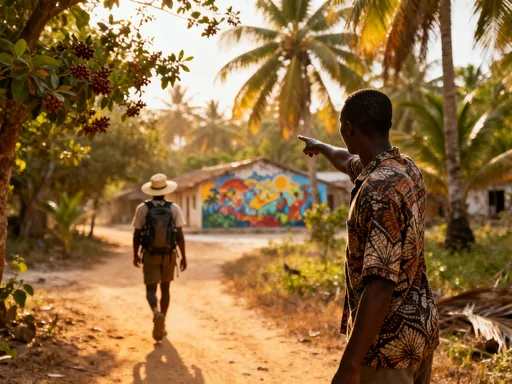
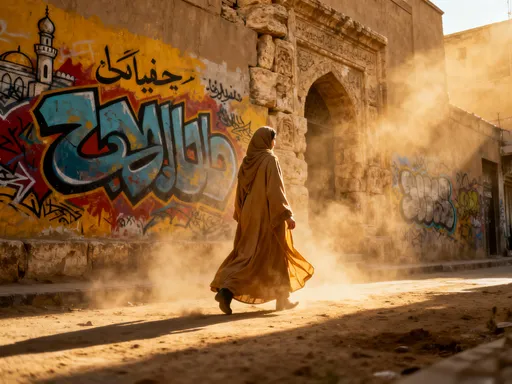
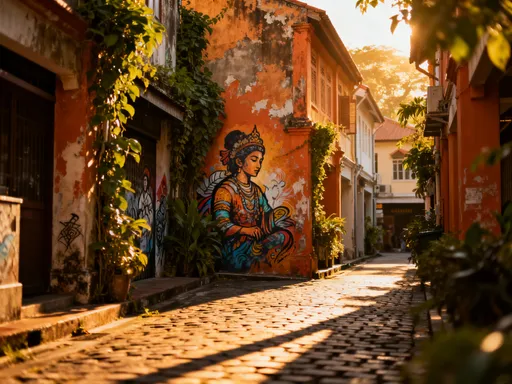
Arriving in Nouakchott, one might initially perceive a city shaped by resilience rather than refinement. Yet beneath its unassuming surface pulses a rhythm of creativity that defies expectation. The capital of Mauritania, situated on the Atlantic coast, is often overlooked by international travelers who associate West Africa’s cultural richness with more widely visited nations. But those who pause long enough to observe begin to notice something extraordinary: art is not confined to galleries or museums here—it lives in the streets, in homes, and in daily rituals. Women in brightly colored *moumouns*—traditional handwoven garments—move through bustling markets where the patterns on their fabric echo the ripples of desert sands. Street corners reveal murals painted in deep ochres and cobalt blues, their abstract forms inspired by both ancestral symbols and environmental themes.
Nouakchott functions as a cultural threshold, the starting point for journeys into some of West Africa’s most significant protected landscapes. While the city itself is not a conservation area, its artistic identity is deeply intertwined with the natural world beyond its borders. Artists frequently draw inspiration from the nearby Banc d’Arguin National Park, the Adrar Plateau, and the vast Saharan expanses. Graffiti collectives use public walls to depict migratory birds, endangered sea turtles, and vanishing water sources—visual narratives that bridge urban life with ecological urgency. This fusion of environment and expression creates a unique framework: conservation is not presented as a scientific abstraction but as a living, evolving form of cultural storytelling.
What makes Nouakchott particularly compelling is how its residents maintain a deep respect for balance—between tradition and modernity, development and preservation, human presence and natural silence. This equilibrium is reflected in the city’s architecture, where low-rise buildings blend into the horizon, and in its music, where the haunting melodies of the *ardin* (a traditional harp-like instrument) evoke the call of the wind across dunes. Visitors are often struck by the quiet dignity of the place, a city that does not shout for attention but invites contemplation. In this way, Nouakchott prepares the soul for the landscapes ahead—not through spectacle, but through subtle attunement to the rhythms of place.
The Banc d’Arguin National Park: A Masterpiece of Tides and Silence
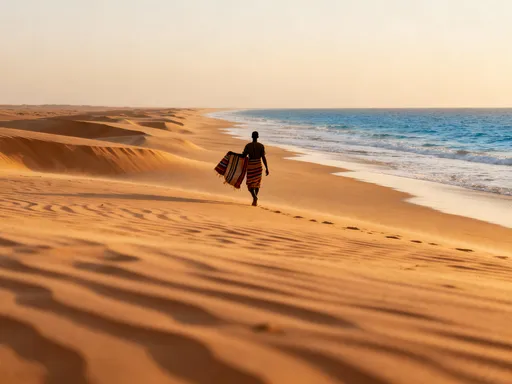
Just a short journey north of Nouakchott lies one of Africa’s most ecologically vital yet artistically evocative landscapes—Banc d’Arguin National Park. Designated a UNESCO World Heritage Site in 1989, this 12,000-square-kilometer coastal sanctuary straddles the boundary between desert and ocean, creating a rare and fragile ecosystem where life thrives in delicate equilibrium. At first glance, the park appears austere: flat salt flats stretch toward the horizon, interrupted by low-lying islands of mangroves and sandbanks that emerge and vanish with the tides. But as light shifts throughout the day, the landscape transforms. Morning mist softens the edges of the water; midday sun turns the mudflats into shimmering mirrors; and at dusk, the sky ignites in hues of rose and gold, casting long shadows across the tidal channels.
This is not a place of loud beauty, but of quiet profundity. The true artistry of Banc d’Arguin lies in its movement—the slow ebb and flow of water, the synchronized flight of thousands of birds, the gentle rustle of reeds in the breeze. It is estimated that over two million migratory birds pass through the park each year, including flamingos, spoonbills, and curlews, many traveling from as far as Scandinavia and Siberia. Their presence turns the sky into a living canvas, where flocks form ever-changing patterns against the clouds. The contrast between the stillness of the desert and the dynamism of birdlife creates a visual poetry that few other places on Earth can match.
Integral to this ecological masterpiece are the Imraguen people, a small fishing community whose ancestors have lived along these shores for centuries. Their sustainable practices—using handcrafted wooden boats and traditional nets—have helped preserve the health of the ecosystem. More than mere inhabitants, the Imraguen are cultural custodians, their way of life a testament to harmony between human activity and environmental stewardship. Their knowledge of tides, fish behavior, and bird migration is passed down orally, often embedded in songs and proverbs that reflect a deep aesthetic appreciation for the natural world. In this sense, conservation in Banc d’Arguin is not enforced by regulation alone but sustained through cultural memory and artistic expression.
Visitors to the park are reminded that beauty here is not something to be captured or possessed, but witnessed with reverence. There are no paved roads, no luxury lodges—only basic guesthouses run by local families and guided excursions that emphasize minimal impact. The experience is immersive and humbling, inviting travelers to slow down, listen, and observe. In a world increasingly dominated by noise and speed, Banc d’Arguin offers a rare opportunity to reconnect with the quiet rhythm of nature, where every element—from the flight of a single bird to the curve of a sandbar—feels like a brushstroke on an immense, unfolding painting.
Art in the Environment: How Nature Inspires Mauritanian Creativity
The relationship between nature and art in Mauritania is not symbolic—it is structural. Across the country, traditional crafts and artistic expressions are deeply rooted in environmental forms. The patterns found in Mauritanian textiles, for example, often mimic the ripples left by wind on sand dunes or the concentric circles formed by raindrops on still water. These designs are not merely decorative; they are visual languages that encode knowledge about the land, its cycles, and its vulnerabilities. In the hands of skilled weavers, cotton and wool become carriers of ecological memory, each thread a reminder of the delicate balance that sustains life in an arid climate.
Jewelry-making offers another striking example of nature-inspired artistry. Silver pendants worn by women in northern regions frequently feature motifs resembling desert flora, such as the *acacia* tree or the resilient *tamarix* shrub. Some pieces incorporate geometric patterns that mirror the hexagonal formations of dried mud flats, while others echo the spiral shapes of seashells found along the Atlantic coast. These designs are not random—they reflect a deep observational skill, honed over generations of living in close proximity to the elements. The craftsmanship is meticulous, with each piece requiring hours of handwork, reinforcing a cultural value of patience and attention to detail that parallels the slow processes of nature itself.
Even in music, the environment finds its voice. Traditional songs often describe landscapes with poetic precision—mentioning specific dunes, wells, or seasonal winds by name. The rhythm of the *tbal*, a large drum used in ceremonial music, mimics the sound of distant thunder or the steady pulse of waves. Lyrics frequently carry messages about water conservation, the importance of shade trees, or the need to protect grazing lands. In this way, music becomes both an artistic medium and an educational tool, preserving ecological wisdom in a form that is accessible and emotionally resonant.
What makes this connection so powerful is that it is reciprocal: protecting the environment ensures the survival of these art forms, just as the art forms reinforce the cultural imperative to protect the land. When a dune disappears due to desertification, it is not only a loss of habitat but also the erosion of a visual motif that once inspired generations of artisans. When a bird species declines, a musical phrase may fade from memory. Thus, conservation in Mauritania is not just about biodiversity—it is about safeguarding a living cultural heritage that is inseparable from the natural world. This understanding transforms preservation from a technical challenge into a creative responsibility.
Chinguetti and the Ancient Libraries: Where Calligraphy Becomes Heritage Art
Far from the coast, nestled in the heart of the Sahara, the ancient town of Chinguetti stands as a monument to intellectual and spiritual artistry. Founded in the 13th century, this ksar (fortified village) was once a major center of Islamic scholarship and trans-Saharan trade. Today, it is recognized as part of a UNESCO World Heritage Site, not for its size or grandeur, but for its profound cultural legacy. At the core of this legacy are the town’s private libraries, some of which house manuscripts dating back over a thousand years. These texts—written in elegant Arabic script on parchment and paper—cover subjects ranging from astronomy and medicine to law and poetry. But they are more than historical documents; they are works of art, their calligraphy so refined that each letter appears to dance across the page.
The preservation of these manuscripts is itself an act of artistry and devotion. Families in Chinguetti have passed down the responsibility of safeguarding these books for centuries, protecting them from sand, humidity, and time. The process of restoration—cleaning pages, repairing bindings, and transcribing fragile texts—requires immense skill and patience. Some artisans specialize in replicating the original ink, made from natural pigments like soot and gum arabic, ensuring that new copies remain faithful to the aesthetic and material traditions of the past. In this way, the act of preservation becomes a form of artistic continuation, linking past and present through craftsmanship.
What is particularly remarkable is how these texts reflect an early understanding of environmental stewardship. Many manuscripts contain detailed observations about desert climates, water management, and sustainable agriculture. Scholars in Chinguetti understood the fragility of their environment long before modern ecology existed as a science. Their writings emphasize balance—between human need and natural limits, between use and renewal. These principles are not presented as dry regulations but as ethical and spiritual imperatives, woven into poetry and religious commentary. The beauty of the script enhances the weight of the message, making the wisdom within more memorable and impactful.
Chinguetti, though remote, offers a powerful lesson for contemporary conservation efforts: protection is not only about physical boundaries or legal designations—it is also about cultural continuity. When a manuscript is preserved, it is not just knowledge that survives, but a way of seeing the world. The town’s enduring legacy reminds us that art and intellect can flourish even in the harshest conditions, provided there is a commitment to care, patience, and reverence. In this sense, Chinguetti is not a relic of the past, but a living example of how cultural and environmental preservation can be one and the same.
Urban Murals and Textile Studios: Contemporary Art Responds to Nature
Back in Nouakchott, a new generation of artists is redefining the relationship between art and the environment. Across the city, public walls have become canvases for large-scale murals that address urgent ecological issues. One prominent project, led by a collective called Atelier du Soleil, features a series of paintings along the Corniche—a seaside boulevard—depicting the life cycle of sea turtles, the impact of plastic pollution, and the retreat of coastal mangroves. The style blends traditional Mauritanian motifs with modern graphic techniques, creating images that are both visually striking and emotionally compelling. These murals do not merely decorate; they educate, provoke thought, and inspire community action.
Textile studios are also emerging as hubs of environmental advocacy. In the Ksar neighborhood, women-led cooperatives are reviving ancient weaving techniques while incorporating eco-conscious themes into their designs. One collective, Tiris Zemmour Artisans, creates fabric collections that depict endangered species such as the slender-horned gazelle and the Mediterranean monk seal. Each piece comes with a small tag explaining the animal’s status and the importance of habitat protection. By selling these textiles locally and through fair-trade networks abroad, the artisans generate income while raising awareness about biodiversity loss.
Performance art is another growing medium. During the annual Festival du Desert et de la Mer, dancers and musicians collaborate on productions that dramatize the effects of climate change on coastal communities. One notable piece, titled *The Last Tide*, uses shadow play and traditional instruments to tell the story of a fishing village threatened by rising sea levels. The performance ends not with despair, but with a communal song of resilience, inviting the audience to join in. These artistic initiatives demonstrate that creativity can be a powerful tool for environmental engagement, transforming abstract concerns into tangible, emotional experiences.
What unites these diverse efforts is a shared belief: art is not separate from activism, nor is beauty divorced from responsibility. In Nouakchott, artists are not waiting for policy changes or international funding—they are using the tools they have to spark dialogue and inspire change. Their work transforms public spaces into open-air galleries with purpose, where every brushstroke, thread, and note carries a message of care for the planet.
Traveling Responsibly: How Visitors Can Engage Without Disrupting
For those drawn to Mauritania’s hidden sanctuaries, the question is not only where to go, but how to go. Responsible travel is essential in a country where ecosystems are fragile and communities are protective of their heritage. The first principle is respect: visitors should approach protected areas not as conquerors of wilderness, but as guests in a carefully balanced world. This means adhering to local guidelines, staying on designated paths, and avoiding any behavior that could disturb wildlife or damage vegetation.
Supporting local artisans is one of the most meaningful ways to contribute. When travelers purchase textiles, jewelry, or crafts directly from makers—rather than from mass-market vendors—they ensure that income stays within the community. It also fosters cultural exchange, allowing visitors to learn about the stories behind each piece. Many artisans welcome conversations about their techniques and inspirations, creating connections that go beyond transactional tourism.
Choosing eco-conscious tour operators is equally important. Reputable guides in Banc d’Arguin, for example, limit group sizes, use non-motorized boats, and provide educational commentary about the ecosystem. They work closely with Imraguen communities, ensuring that tourism benefits locals rather than displacing them. Similarly, in Chinguetti, responsible tours emphasize quiet observation, prohibit flash photography in libraries, and encourage donations to preservation funds.
Finally, travelers should minimize their environmental footprint. This includes carrying reusable water containers, avoiding single-use plastics, and disposing of waste properly. In desert environments, even small disturbances can have lasting effects. By practicing low-impact travel, visitors honor the very qualities that drew them to Mauritania in the first place—the purity of light, the silence of the dunes, the clarity of the night sky. True engagement is not about leaving a mark, but about carrying a lesson home.
Why This Fusion Matters: The Future of Art-Led Conservation
The fusion of art and conservation in Mauritania offers a model that the world urgently needs. In an era of climate crisis and biodiversity loss, traditional approaches to environmental protection—laws, fines, restrictions—often feel insufficient or alienating. But when nature is seen as a source of inspiration, protection becomes intuitive, even joyful. In Mauritania, people do not conserve the land because they are told to; they do so because they see themselves reflected in it—in the patterns of their fabric, the melodies of their songs, the strokes of their calligraphy.
This perspective shifts the narrative from scarcity to abundance, from loss to creation. It invites us to reimagine conservation not as a series of prohibitions, but as a collaborative act of storytelling, where every person can be a contributor. Artists, scientists, elders, children—all have roles to play in preserving the delicate balance between human life and the natural world.
For global travelers, Mauritania offers more than a destination—it offers a transformation. It teaches us to see beauty not as something separate from utility, but as an essential part of survival. It shows that culture and ecology are not parallel systems, but intertwined threads in the same fabric. And it reminds us that the most enduring forms of protection are those rooted in love, reverence, and creativity.
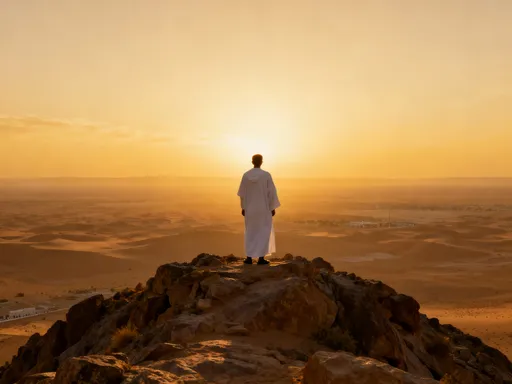
As the sun sets over the dunes, painting the sky in hues no artist could fully capture, one truth becomes clear: the greatest masterpieces are not made by human hands alone. They emerge from the dialogue between people and place, between memory and moment, between silence and song. In Mauritania, that dialogue continues—one brushstroke, one stitch, one note at a time.