You Won’t Believe What These Buildings in Baguio Hide
Nestled in the cool highlands of the Philippines, Baguio isn’t just about pine trees and strawberry taho. Its landmark buildings carry stories of culture, resistance, and identity. I walked through colonial-era structures, indigenous-inspired designs, and wartime remnants that shaped a city like no other. What I found wasn’t just architecture—it was memory carved in stone and wood. This is more than sightseeing; it’s stepping into the soul of the Cordilleras.
The Heartbeat of the Highlands: Baguio’s Cultural Identity
Baguio City stands at 5,000 feet above sea level, cradled by pine forests and misty mornings, but its true essence lies not in altitude but in ancestry. Long before it became the Summer Capital of the Philippines, this land belonged to the Ibaloi people, whose presence dates back thousands of years. Their burial sites, including the famous Kabayan mummies, speak of a deep spiritual relationship with the earth—a connection still echoed in the city’s rhythm today. The Ibaloi were not displaced by Baguio’s modern rise; instead, they became foundational to its cultural identity, their language, traditions, and artistry woven into the city’s evolving narrative.
Understanding the Ibaloi heritage is essential to appreciating Baguio’s architecture. Their ancestral domains were not defined by walls or borders but by sacred mountains, rivers, and communal spaces—concepts subtly mirrored in how public areas are used today. When visitors stroll through open plazas or gather during festivals like Panagbenga, they are participating in a tradition of communal gathering that predates colonialism. Even the city’s name, derived from the Ibaloi word "bagiw" meaning moss, reflects a deep ecological awareness rooted in indigenous knowledge.
This cultural continuity shapes how buildings are perceived and preserved. Structures in Baguio are not merely functional; they are symbolic. A church, a museum, or a park becomes a vessel for collective memory. The integration of indigenous motifs—such as geometric patterns inspired by traditional tattoos or woven textiles—into modern façades is not decorative but declarative. It says: we remember who we are. For families visiting Baguio, especially mothers seeking meaningful experiences for their children, these layers of meaning transform a simple trip into an educational journey about resilience, belonging, and identity.
Burnham Park: Where City Life Meets Collective Memory
At the center of Baguio’s urban landscape lies Burnham Park, a sprawling green oasis designed by American architect Daniel Burnham in 1904. Originally conceived as a centerpiece for the new hill station, the park was envisioned as a place of order, beauty, and civic engagement. Its geometric layout, with radial pathways and a central lagoon, reflects early 20th-century ideals of urban planning—spaces meant to elevate public life. Over a century later, Burnham Park remains exactly that: a living, breathing heart where generations converge.
What makes Burnham Park extraordinary is not just its design but its adaptability. It has hosted presidential inaugurations, student protests, weekend picnics, and the annual Panagbenga Festival’s grand parade. The same pathways once walked by American officials are now filled with children flying kites, couples rowing paddle boats, and elders practicing tai chi at dawn. This evolution from colonial symbol to communal space illustrates the Filipino ability to reclaim and repurpose history. The park is no longer a relic of foreign vision—it is a mirror of local life.
For families, Burnham Park offers both recreation and quiet reflection. The Children’s Park, with its iconic drum fountain and play structures shaped like native animals, invites laughter and movement. Nearby, the Rose Garden provides a fragrant pause, its blooms meticulously maintained as a tribute to Baguio’s cool climate and horticultural pride. These spaces, though simple, foster connection—between parents and children, between neighbors, between past and present. They remind us that cities thrive not on grand monuments alone, but on accessible, inclusive spaces where everyday life unfolds.
Moreover, Burnham Park exemplifies sustainable urbanism. Efforts to limit vehicle access, promote walking, and preserve green cover align with global trends toward eco-friendly cities. Local authorities have introduced bike-sharing programs and expanded pedestrian zones, ensuring the park remains a sanctuary amid rising urban density. In doing so, they honor Burnham’s original intent while adapting it to contemporary needs—a balance many modern cities struggle to achieve.
The Cathedral of the Lord’s Ark: A Mountain Sanctuary with a Story
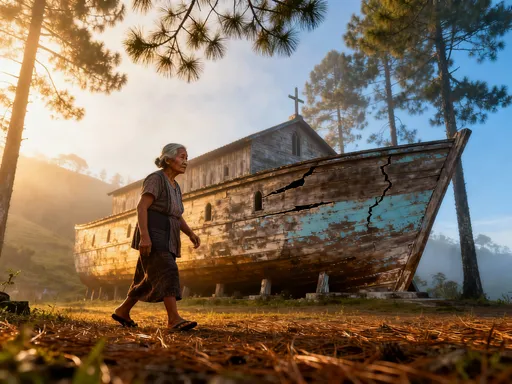
Rising against the skyline near Mines View Park, the Cathedral of the Lord’s Ark—commonly known as Baguio Cathedral—stands as one of the city’s most recognizable landmarks. Its striking design, shaped like Noah’s Ark with a pointed prow and arched roof, immediately captures attention. But beyond its unique silhouette lies a deeper narrative of faith, survival, and cultural synthesis. Consecrated in 1936 and rebuilt after World War II destruction, the cathedral has weathered conflict, earthquakes, and time, emerging as a sanctuary of both spiritual and historical significance.
The ark motif is not merely architectural whimsy; it carries profound symbolism. For a city nestled in earthquake-prone highlands and vulnerable to landslides, the image of refuge resonates deeply. The cathedral becomes a metaphor for safety amid uncertainty—a message especially meaningful to families who value security and continuity. Inside, the space is bathed in natural light filtering through stained-glass windows depicting scenes from the Bible, alongside motifs of local flora and fauna. This blending of universal Christian themes with regional elements reflects a faith that is both global and rooted in place.
What sets Baguio Cathedral apart is its accessibility. Unlike some historic churches that feel formal or distant, this cathedral welcomes all. On Sundays, it fills with worshippers from diverse backgrounds—Ibaloi elders, urban professionals, students, and tourists—all united in prayer. The surrounding plaza buzzes with activity: vendors sell woven bags and hand-carved souvenirs, children chase pigeons, and couples take photos beneath the stone arches. The cathedral is not isolated from the city; it is embedded within it, serving as both a place of worship and a cultural gathering point.
Restoration efforts after the 1990 Luzon earthquake demonstrated the community’s commitment to preserving this landmark. Using reinforced materials while maintaining the original design, engineers and church leaders ensured the cathedral could endure future challenges. Today, it stands not only as a house of God but as a testament to human resilience. For visitors, especially those raising children in a fast-changing world, the cathedral offers a quiet space to reflect on values—faith, perseverance, and hope—that transcend generations.
BenCab Museum: Art, Heritage, and the Legacy of a National Treasure
Tucked into the hills of Tuba, just outside Baguio, the BenCab Museum offers a serene escape where art, nature, and heritage converge. Founded by National Artist Benedicto Cabrera, affectionately known as BenCab, the museum is more than a gallery—it is a personal testament to one man’s love for Filipino identity and artistic expression. Built on a mountainside with panoramic views of the valley below, the structure itself is a work of art, blending contemporary design with indigenous influences. Wooden carvings, thatched roofs, and stone pathways echo the aesthetics of Cordilleran architecture, creating a space that feels both modern and ancestral.
BenCab’s journey as an artist mirrors the nation’s cultural evolution. His works, prominently displayed throughout the museum, explore themes of womanhood, mythology, and social commentary, often infused with symbols from Philippine folklore. One of his most celebrated series, the “Sabel” paintings, portrays a marginalized scavenger woman transformed into an icon of dignity and resilience. For mothers and families, these pieces evoke empathy and strength, reminding viewers of the quiet heroism found in everyday lives.
The museum also houses rotating exhibits from other Filipino artists, as well as a dedicated section for indigenous textiles and artifacts from the Cordillera region. The Bulul Café, named after the traditional rice guardian figures, serves organic dishes sourced from local farms, reinforcing the connection between culture and sustainability. A short trail leads to the EKsPOSYON, an open-air sculpture garden featuring contemporary installations that dialogue with the natural environment.
Perhaps the most touching aspect of BenCab Museum is its educational mission. School groups frequently visit, guided by curators who explain not just the art, but the stories behind it. Children learn about the importance of preserving heritage, the value of creativity, and the power of self-expression. For parents seeking meaningful cultural experiences, the museum offers a rare blend of beauty, depth, and tranquility. It proves that art is not confined to elite circles—it belongs to everyone, especially those who carry the legacy of their ancestors in their hearts.
Session Road in the Sun: History Etched in Facades
Walking down Session Road is like flipping through the pages of Baguio’s history book. Once the site of the Philippine Commission’s summer sessions—hence its name—this bustling commercial strip has evolved from a colonial administrative corridor into the city’s main artery of commerce and culture. Flanked by shops, restaurants, and historic buildings, Session Road pulses with energy, yet beneath its modern façade lies a rich architectural tapestry.
Surviving structures from the pre-war and mid-20th century reveal a mix of styles—Art Deco, neoclassical, and tropical modernism—each reflecting the era in which it was built. The old Post Office building, with its symmetrical columns and arched windows, speaks of American colonial order, while smaller storefronts with geometric reliefs and streamlined forms nod to 1930s design trends. Some buildings retain original wooden shutters and capiz shell windows, practical adaptations to the highland climate that also add charm and authenticity.
What makes Session Road compelling is its layering of time. A century-old façade might now house a trendy café or a souvenir shop selling woven slippers and peanut brittle. This adaptive reuse preserves history without freezing it in place. The city government, in partnership with heritage advocates, has implemented guidelines to protect key structures while allowing for renovation and modernization. These efforts ensure that development does not erase memory.
For families, Session Road offers more than shopping—it provides a tactile experience of history. Children can touch century-old bricks, compare old photographs with present-day scenes, and imagine life in a different era. Local guides occasionally offer walking tours that highlight hidden details: a carved motif representing a local legend, a preserved staircase used by officials during the Commonwealth period. These moments turn a casual stroll into a living history lesson, fostering intergenerational dialogue about change, continuity, and pride in place.
Wright Park and the Mansion: Echoes of Colonial Elegance
Just a short drive from the city center, Wright Park and the Mansion Grounds offer a glimpse into Baguio’s colonial past and its transformation into a shared public space. Originally designed as a leisure garden for American officials, Wright Park features a wide promenade lined with pine trees and a central equestrian statue of William Wallace, an American civil engineer. Today, it serves as a popular spot for horseback riding, photo sessions, and family walks. The once-exclusive garden is now open to all, symbolizing a shift from privilege to inclusivity.
Adjacent to Wright Park lies the Mansion, the official summer residence of the President of the Philippines. Built in 1908, the house has hosted numerous heads of state and foreign dignitaries. Though the interior is not regularly open to the public, the exterior and surrounding gardens are meticulously maintained, offering a sense of grandeur and historical continuity. The building’s white columns, wide verandas, and manicured lawns reflect the tropical colonial aesthetic—designed for comfort and status in a cool mountain retreat.
What makes this pair of sites particularly interesting is their contrast. The Mansion represents power, privacy, and protocol, while Wright Park embodies accessibility, leisure, and community. Yet together, they tell a unified story of adaptation. After being destroyed during World War II and rebuilt in the 1970s, the Mansion was restored not as a relic but as a functioning seat of government. Meanwhile, Wright Park has embraced its role as a people’s space, hosting events like tree-planting ceremonies and cultural performances.
For families, the area offers both beauty and learning. Children can feed carrots to gentle horses, run through open lawns, and learn about the city’s political history through interpretive signage. The juxtaposition of formal architecture and relaxed green space creates a balanced environment—orderly yet free, historic yet alive. It reminds visitors that heritage need not be behind glass; it can be walked on, sat under, and enjoyed by all.
Preserving the Past: Challenges and Hopes for Baguio’s Landmarks
Despite its charm, Baguio faces significant challenges in preserving its architectural heritage. Rapid urbanization, increasing tourism, and population growth put pressure on historic structures. Buildings are sometimes demolished or altered beyond recognition to make way for parking lots, hotels, or commercial complexes. Earthquakes, particularly the devastating 1990 quake that destroyed many older edifices, remain a constant threat in this seismically active region. Climate change adds another layer of risk, with heavier rains and landslides endangering hillside constructions.
Yet, hope persists. Community-led initiatives have emerged to protect what remains. The Baguio Heritage Foundation, along with local schools and civic groups, conducts documentation projects, heritage walks, and advocacy campaigns. Students participate in mural painting and oral history collection, ensuring that younger generations become stewards of memory. Government agencies, including the National Historical Commission and the City Planning Office, have designated several structures as heritage sites, providing legal protection and restoration support.
One successful example is the rehabilitation of the Baguio City Hall, a mid-century modern building that underwent careful restoration to maintain its original lines and materials. Similarly, efforts to revitalize the old Teacher’s Camp—a former rest house for American educators—aim to balance conservation with sustainable tourism. These projects demonstrate that preservation is not about stopping progress but guiding it with respect for the past.
Education plays a crucial role. When families visit these sites with awareness, they contribute to cultural continuity. A child who learns why a building looks a certain way, or why a park has a particular layout, grows into an adult who values heritage. Simple actions—like choosing to walk instead of drive, supporting local artisans, or respecting historical signage—become acts of preservation. The future of Baguio’s landmarks depends not on grand policies alone, but on daily choices made by residents and visitors alike.
Baguio’s landmark buildings are not just relics—they are storytellers. Each structure reflects resilience, identity, and cultural fusion. By protecting them, we honor not only history but the living communities that keep their spirit alive. The real journey begins when we see buildings not as bricks, but as voices.