What Mecca’s Sacred Landscapes Taught Me About Faith and Beauty
Mecca isn’t just a destination—it’s a journey of the soul. As the spiritual heart of Islam, its landscapes carry centuries of devotion, humility, and awe. I never expected the sheer emotional power of standing near the Kaaba or walking through Mina’s vast valleys. Every stone, every prayer, feels alive. The air hums with whispered supplications, and the rhythm of circling pilgrims creates a living spiral of faith. This guide shares the most meaningful scenic spots, not as a tourist, but as a traveler touched by something greater. It is an invitation to understand the quiet beauty and profound depth of one of the world’s most sacred places—a place where geography and grace meet.
The Heartbeat of Mecca: Understanding the Spiritual Significance
Mecca stands at the center of the Islamic world, not because of its size or political influence, but because of its spiritual gravity. For over 1,400 years, it has drawn Muslims from every corner of the globe in pursuit of divine closeness. As the birthplace of the Prophet Muhammad (peace be upon him) and the site of the first house of worship dedicated to the One God, Mecca holds a unique place in religious history. The Quran itself refers to the city as "the mother of all cities," a designation that underscores its primacy in Islamic tradition. Its significance is not merely historical; it is deeply experiential, shaping the daily lives of over a billion believers who turn toward it five times a day in prayer.
One of the most defining aspects of Mecca is that it is inaccessible to non-Muslims. This restriction is not meant as exclusion, but as protection—a way to preserve the sanctity of a space dedicated entirely to worship and reflection. The Saudi authorities enforce this rule with care, ensuring that only those entering with sincere religious intent are permitted. This policy fosters an atmosphere of unity and reverence, where cultural, linguistic, and national differences dissolve in the shared purpose of devotion. Pilgrims wear simple white garments—ihram—that erase visible markers of wealth or status, reinforcing the idea that all are equal before God.
The emotional atmosphere during Hajj and Umrah is unlike any other religious gathering in the world. Millions move in synchronized rhythm, circling the Kaaba, climbing Mount Arafat, and standing together in prayer. There is no music, no spectacle—only the sound of voices lifted in prayer, the rustle of fabric, and the steady footfall of believers walking paths trodden by prophets and saints. It is a powerful reminder that faith is not just a private matter, but a collective experience. The sense of belonging to something timeless and universal often brings pilgrims to tears, not out of sorrow, but from the overwhelming presence of divine mercy.
The Grand Mosque: Where Millions Unite in Prayer
At the center of Mecca lies Al-Masjid al-Haram, the Grand Mosque, a vast architectural marvel that houses the Kaaba. This mosque is the largest in the world, capable of accommodating over two million worshippers during peak times. Its scale is staggering: expansive marble courtyards stretch in every direction, ringed by towering minarets and shaded colonnades. The most recent expansions have added climate-controlled areas, underground prayer halls, and advanced crowd management systems, all designed to serve the growing number of pilgrims while preserving the sanctity of the space.
The Kaaba, a cube-shaped structure draped in black silk, stands at the mosque’s heart. It is not worshipped, but rather serves as the qibla—the direction toward which all Muslims pray. To see it for the first time is to feel a deep pull, both physical and spiritual. Pilgrims circle it in a counterclockwise motion during tawaf, a ritual that symbolizes unity and devotion. The sight of thousands moving in unison, hands raised in supplication or pressed against the Kaaba’s silver bands, creates a mesmerizing visual rhythm. The Black Stone embedded in one corner, though small, draws intense reverence, with many striving to touch or kiss it as the Prophet once did.
For those seeking moments of quiet reflection, timing is essential. Early morning hours, just before Fajr prayer, offer a rare sense of stillness, when the crowds are thinner and the air is cool. The soft glow of dawn lighting up the marble surfaces adds to the serenity. Pilgrims are advised to enter through less crowded gates, such as King Fahd Gate, and to use the upper levels of the mosque to avoid the densest flows of foot traffic. Women may find designated prayer areas on the ground floor and in the women’s sections, which are well-maintained and accessible. Comfortable footwear, a prayer mat, and a small pouch for personal items are practical essentials.
Mount Arafat: The Summit of Forgiveness
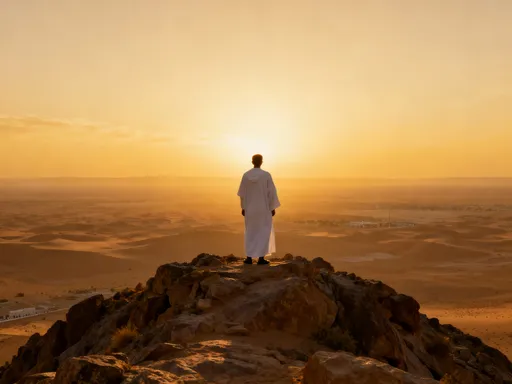
About 20 kilometers east of Mecca lies the plain of Arafat, a vast, arid landscape that becomes the focal point of the Hajj pilgrimage on the ninth day of Dhu al-Hijjah. Known as the Day of Arafah, this is considered the most important day of Hajj, when pilgrims stand in earnest prayer from noon until sunset, seeking forgiveness and mercy. The mountain of Jabal al-Rahmah, or the Mount of Mercy, rises gently from the plain, marking the spot where the Prophet Muhammad delivered his final sermon. Though the climb is modest, the spiritual weight of the place is immense.
The landscape of Arafat is stark and open, with few trees or structures to break the horizon. This simplicity enhances the sense of exposure and humility, as pilgrims stand under the open sky, fully aware of their smallness in the face of the divine. The heat can be intense, especially in summer months, but the atmosphere is one of focused devotion. Millions gather on portable platforms and under shaded tents provided by the Saudi government, creating a sea of white garments that ripple in the wind. The sound of collective prayer rises like a wave, a continuous murmur of repentance and hope.
In Islamic tradition, it is said that on this day, God descends to the nearest heaven and boasts of His servants standing in worship. The Prophet Muhammad said, "Hajj is Arafat," emphasizing that the validity of the pilgrimage hinges on this day’s observance. For many pilgrims, standing at Arafat is the emotional climax of their journey—a moment of profound introspection, where past mistakes are acknowledged, and hearts are renewed. The experience often leaves a lasting imprint, not just as a religious obligation fulfilled, but as a transformative encounter with grace.
Mina: A Valley of Ritual and Reflection
Nestled in a narrow valley between Mecca and Mount Arafat, Mina transforms during Hajj into a temporary city of over 100,000 air-conditioned tents. These tents, organized by nationality and pilgrimage group, house millions of pilgrims during the three or four days of the Hajj rites. The site is historically significant as the place where Prophet Ibrahim (Abraham) is believed to have resisted the temptation of Satan and performed the act of sacrifice. Today, it is the location of the symbolic stoning of the devil, known as rami al-jamarat.
The ritual of stoning takes place at three stone pillars, representing the locations where Satan attempted to dissuade Ibrahim from obeying God’s command. Pilgrims throw seven pebbles at each pillar over the course of several days, symbolizing the rejection of temptation and the reaffirmation of faith. The area has been redesigned in recent years with multi-level bridges and wider walkways to improve safety and reduce congestion. Despite these improvements, the ritual requires careful planning—pilgrims are encouraged to go early in the morning or late in the evening to avoid peak crowds, and to follow the designated flow of movement to prevent accidents.
Beyond the ritual, Mina offers a unique visual and emotional experience. The sight of endless rows of white tents under a desert sky evokes a sense of transience and humility. Life here is stripped down to essentials: simple meals, shared spaces, and constant prayer. For many, the simplicity becomes a form of spiritual clarity. The valley, though surrounded by mountains, feels open and exposed, reinforcing the idea that one stands bare before God. It is not a place of comfort, but of purpose—a reminder that faith often requires sacrifice, discipline, and resilience.
Muzdalifah: Between Desert Silence and Divine Connection
Located between Mina and Arafat, Muzdalifah is a vast, open plain where pilgrims spend the night after leaving the plains of Arafat. This stop is a required part of the Hajj journey, where pilgrims collect pebbles for the stoning ritual and perform the combined Maghrib and Isha prayers. Unlike the structured environments of the Grand Mosque or Mina’s tent city, Muzdalifah offers a raw, unfiltered experience of the desert. There are no permanent structures, no shade—only the open sky and the silence of the night.
The beauty of Muzdalifah lies in its stillness. As the sun sets behind the hills, the temperature drops, and the stars emerge in brilliant clarity. Millions lie on the ground, wrapped in simple garments, gazing upward in quiet contemplation. The absence of light pollution makes the Milky Way visible in stunning detail, a reminder of the vastness of creation. In this moment, the distractions of daily life fall away, and the soul feels exposed in the best possible way—open to prayer, to memory, to divine presence. Many pilgrims describe this night as one of the most peaceful and spiritually intense of their lives.
Collecting pebbles is a simple act, but it carries deep symbolism. The stones, no larger than a chickpea, are gathered from the desert floor and purified for ritual use. This act connects pilgrims to the earth and to the long line of believers who have performed the same gesture. It is a tactile reminder that faith is not only intellectual or emotional, but also physical. The journey through Muzdalifah, though brief, teaches patience and presence—qualities that are easy to lose in the rush of modern life. In the silence of the desert, one learns to listen again.
The Scenic Journey: From Jeddah to Mecca
The pilgrimage journey often begins in Jeddah, the coastal gateway to Mecca, located about 70 kilometers west of the holy city. As one travels eastward from the Red Sea, the landscape undergoes a dramatic transformation. The humid air of the coast gives way to dry, rocky terrain, and the flat plains rise into rugged mountains. This route, known as the Jeddah-Mecca Highway, is lined with modern infrastructure—tunnels, overpasses, and service stations—yet it follows ancient caravan paths once used by traders and pilgrims for centuries.
The change in elevation is noticeable, with Mecca sitting in a narrow valley about 277 meters above sea level. As the road winds through mountain passes, the first glimpses of the city appear—minarets rising above the stone hills, and the distant glint of the Grand Mosque’s golden dome. The approach is carefully managed, with checkpoints ensuring that only Muslims proceed toward the sacred boundary, or miqat. Pilgrims often enter ihram at these points, changing into the simple white garments that signify their spiritual state.
Transportation options include private vehicles, shuttle buses, and government-operated transit systems. Many pilgrims choose organized tour groups that provide door-to-door service, easing the logistical challenges of travel. The journey from Jeddah takes about an hour under normal conditions, but can take longer during peak pilgrimage seasons. Travelers are advised to carry water, light snacks, and any necessary medications. The transition from coastal city to holy valley is more than geographical—it is symbolic, marking the shift from the worldly to the sacred.
Travel Tips for a Meaningful Pilgrimage Experience
Preparing for a pilgrimage to Mecca requires both physical and spiritual readiness. Pilgrims should begin with intention—ensuring that their journey is motivated by sincere devotion rather than tourism or social obligation. Spiritually, this means increasing prayer, reciting the Quran, and seeking forgiveness in the weeks leading up to departure. Physically, it involves building stamina, as the rituals involve long periods of walking, standing, and exposure to heat. Light exercise, proper hydration, and a balanced diet in the months before travel can make a significant difference.
Packing wisely is essential. The core items include multiple sets of ihram clothing, comfortable and durable footwear, a prayer mat, a copy of the Quran, and a reusable water bottle. Women should bring loose-fitting, modest clothing that complies with Islamic guidelines. Personal hygiene items, sunscreen, and a small first-aid kit are also recommended. Many pilgrims carry a small bag for daily essentials, which can be easily accessed during rituals. Electronic devices should be used sparingly, as the focus should remain on worship and reflection.
Staying hydrated is critical, especially during summer months when temperatures can exceed 40°C (104°F). The Saudi authorities provide free water stations throughout Mecca, Mina, and Arafat, and pilgrims are encouraged to drink regularly, even if they do not feel thirsty. Energy levels can be maintained with light, nutritious meals—dates, fruits, and nuts are traditional and effective choices. Rest is equally important; taking short breaks in shaded areas can prevent exhaustion. Crowd management is another key consideration—following designated paths, listening to announcements, and remaining patient in dense areas helps ensure safety for all.
Ultimately, the pilgrimage is not just about completing rituals, but about inner transformation. Many return home with a renewed sense of purpose, gratitude, and humility. The sacred landscapes of Mecca—its mosques, mountains, and valleys—are not merely destinations, but mirrors that reflect the state of the soul. They teach that beauty is not always found in ornamentation, but in simplicity; that strength is not in power, but in submission; and that true peace comes not from comfort, but from connection. To walk these paths is to remember what matters most—and to carry that remembrance into everyday life.