You Won’t Believe What I Found in Linz — Slow Travel Changed Everything
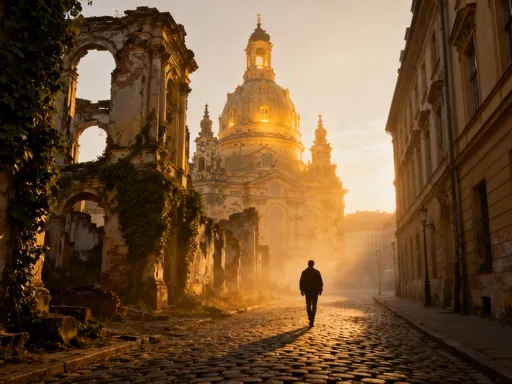
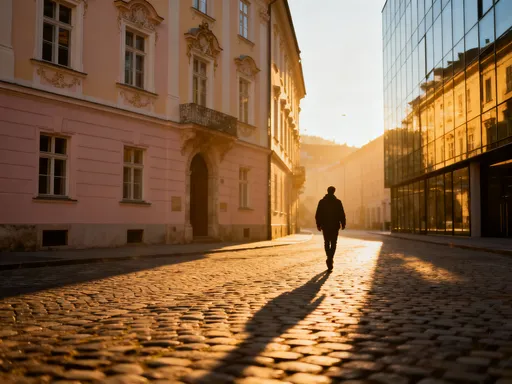
Linz, Austria, isn’t just a stopover—it’s a rhythm. I walked its streets slowly, letting architecture tell stories I’d never noticed before. From Baroque whispers to bold modern statements, every building felt intentional. This isn’t about ticking landmarks off a list. It’s about presence. And in Linz, where history and innovation coexist, slowing down revealed layers most travelers miss. What began as a brief layover turned into a transformative journey—not because of grand monuments or tourist hotspots, but because of the quiet moments between them: a sunlit courtyard, the echo of footsteps on cobblestones, the way light reflects off glass beside centuries-old stone. Linz taught me that travel isn’t measured in miles covered, but in moments truly felt.
The Pulse of Linz: Why This City Rewards Slow Travel
Linz has long been misunderstood. Often dismissed as an industrial city en route to Salzburg or Vienna, it has quietly evolved into a cultural epicenter where art, music, and architectural innovation converge. Yet its true essence resists fast consumption. Unlike cities designed for checklist tourism, Linz unfolds gradually, rewarding those who linger. Its pace is deliberate—not sluggish, but attentive. The city breathes with a rhythm shaped by the Danube River, which curves around its edges like a steady pulse, and by centuries of transformation that have layered one era atop another without erasing what came before.
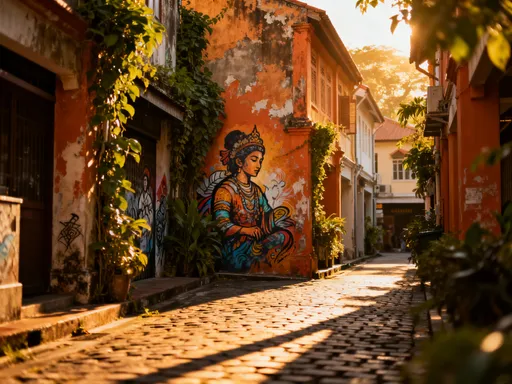
What makes Linz uniquely suited to slow travel is its authenticity. There are no forced reconstructions or over-curated historic zones. Instead, life continues in real neighborhoods where residents sip coffee beneath Baroque arcades and artists convert old factory spaces into studios. The city does not perform for visitors; it simply lives. This makes presence essential. When you slow down, you begin to notice subtle shifts—the change in building materials as you cross from the Altstadt into postwar districts, the way street art appears alongside centuries-old frescoes, or how the scent of freshly baked bread drifts from a centuries-old bakery just steps from a high-tech media lab.
Moreover, Linz’s compact size makes it ideal for unhurried exploration. Most of the city’s architectural highlights are within walking distance, connected by tree-lined boulevards and riverside paths. There’s no need to rush from site to site. Instead, you can follow your curiosity—turn down an alley because of an intriguing doorway, pause to watch a street musician near the Landestheater, or sit on a bench and observe how light moves across a plaza throughout the day. In doing so, you move beyond sightseeing into something deeper: a kind of architectural mindfulness, where observation becomes a form of connection.
The city’s identity is also shaped by its role as a hub for digital culture and contemporary art, most notably through the annual Ars Electronica Festival. Yet this modern energy doesn’t overshadow its past; it dialogues with it. This coexistence invites travelers to engage with time not as a linear path, but as a layered experience. To appreciate Linz fully, one must resist the urge to categorize or rush. It is a city best understood in fragments—each street, each building, each quiet moment adding to a larger, evolving portrait.
Baroque Whispers: The Historic Heart of Linz
The soul of old Linz lives in its Altstadt, a mosaic of pastel-hued facades, gabled rooftops, and winding cobblestone alleys that have witnessed over three centuries of change. Here, the architecture speaks in soft tones—Baroque flourishes carved into stucco, ornate window frames, and the gentle curve of arched doorways that invite you into hidden courtyards. The Martinskirche, with its twin towers rising above the rooftops, stands as a quiet sentinel of this historic core. Though rebuilt after wartime damage, its interior retains a sense of continuity, with frescoes and altarpieces that reflect the city’s enduring Catholic traditions.
Walking through the Hauptplatz, the city’s central square, feels like stepping into a living postcard. The surrounding buildings, many dating back to the 17th and 18th centuries, display a harmonious blend of Austrian Baroque and regional craftsmanship. Their facades are painted in warm ochres, soft pinks, and creamy whites, each building slightly different yet contributing to a unified streetscape. Cafés spill onto the pavement beneath arcades, where locals gather for afternoon coffee and conversation. There’s no grandiosity here—just a lived-in elegance that suggests history not as a museum exhibit, but as daily life.
What makes the Altstadt so rewarding for slow travelers is its lack of rigid structure. Without a strict itinerary, you begin to notice details that might otherwise be overlooked: a weathered stone carving of a cherub above a doorway, a wrought-iron balcony with delicate floral patterns, or a narrow passage leading to a secluded garden where ivy climbs an old well. These moments of discovery are not found on maps. They emerge through patience and presence.
Equally important are the small businesses that have occupied these buildings for generations. A family-run confectionery might occupy the ground floor of a 250-year-old townhouse, its display window filled with handcrafted pastries. A bookshop tucked into a corner building might specialize in rare regional histories, its owner happy to share stories about the neighborhood’s evolution. These interactions—brief, genuine, unscripted—are the heartbeat of the Altstadt. They remind us that architecture is not just about form and function, but about the people who inhabit it, shape it, and pass it on.
Industrial Bones, Creative Spirit: Linz’s Functional Architecture
Just beyond the historic core, Linz reveals another layer of its identity—one built on industry, labor, and practicality. In the 19th century, the city became a center for iron and steel production, fueled by its position along the Danube and access to raw materials from the surrounding regions. This industrial boom left behind a legacy of functional architecture: red-brick factories, utilitarian railway stations, and rows of workers’ housing designed for efficiency rather than ornament. At first glance, these structures may seem unremarkable, even austere. But with time and attention, they reveal a quiet beauty—one rooted in honesty, resilience, and adaptation.
One of the most striking examples is the former industrial zone along the river, where old factory buildings have been repurposed into cultural spaces. The Postsparkasse building, once a hub for financial services tied to industrial labor, now hosts design exhibitions and artist residencies. Its heavy masonry walls and large arched windows speak of durability and purpose. Inside, the rawness of exposed brick and steel beams is preserved, creating a striking contrast with contemporary installations. This adaptive reuse is not merely aesthetic—it reflects a deeper philosophy in Linz: that value lies not only in preservation, but in reinvention.
The workers’ housing districts, such as those near the Urfahr side of the city, offer another glimpse into this era. Built to accommodate the growing labor force, these buildings feature simple facades, symmetrical layouts, and communal courtyards. They lack the decorative details of the Altstadt, but their uniformity carries its own dignity. These were homes for families who powered the city’s economy, and their design reflects a commitment to order, hygiene, and social stability—values that were central to late 19th-century urban planning.
Today, many of these neighborhoods are experiencing quiet revitalization. Local cooperatives are restoring facades, community gardens are transforming vacant lots, and independent cafés are opening in ground-floor units. The changes are subtle, not driven by luxury developers but by residents who value continuity. This slow, organic renewal mirrors the principles of slow travel itself—respect for context, appreciation for incremental progress, and a belief that beauty can emerge from function. In Linz, even the most utilitarian structures are given space to evolve, proving that architecture, like people, can grow without losing its roots.
Post-War Reconstruction: When Simplicity Became Necessity
The mid-20th century brought profound change to Linz, shaped by the aftermath of war and the urgent need for reconstruction. Unlike cities that restored their historic centers to prewar conditions, Linz embraced modernity out of necessity. Entire neighborhoods had been damaged, and with limited resources, the focus shifted to practical, affordable housing. The result was a wave of architecture defined by clean lines, modest materials, and human-scale design. Districts like Kleinmünchen and Froschberg emerged with rows of low-rise apartment blocks, flat roofs, and large windows intended to maximize light and ventilation.
At first glance, these postwar buildings may seem unremarkable—lacking the charm of Baroque facades or the drama of contemporary landmarks. But they tell an essential story: one of resilience, pragmatism, and social care. The architects and planners of this era were not chasing grand statements. They were solving real problems—how to house thousands quickly, safely, and with dignity. The use of prefabricated concrete panels, standardized layouts, and shared green spaces reflected both technological constraints and a commitment to egalitarian living.
What makes these neighborhoods worth exploring slowly is their quiet coherence. Streets are wide enough for sunlight but narrow enough to feel intimate. Playgrounds and communal courtyards are integrated into the design, reflecting a belief in community life. Trees were planted early and have now matured, softening the angularity of the buildings. Over time, residents have personalized their spaces—painting doors in bright colors, adding flower boxes, or installing small sculptures—giving these districts a warmth that was not in the original blueprints.
Walking through these areas today, one gains a deeper appreciation for the values that shaped them: functionality, accessibility, and social equity. These are not flashy ideals, but they are foundational. In a world where urban development often prioritizes profit over people, Linz’s postwar neighborhoods stand as quiet reminders of an alternative path. They may never be featured on postcards, but they are vital to understanding the city’s character. To walk through them is to witness how architecture, even when born of necessity, can become a vessel for everyday life and collective memory.
The Future Is Built Here: Linz’s Contemporary Architectural Icons
If Linz’s past is written in stone and brick, its future is rendered in glass, steel, and light. Nowhere is this more evident than along the Danube River, where a cluster of contemporary buildings forms a bold architectural statement. The Lentos Art Museum, a sleek glass cube floating above the water, is perhaps the most iconic. Designed by Zurich-based architects Weber & Hofer and opened in 2003, its transparent façade reflects the river and sky, changing appearance with the weather and time of day. Inside, it houses an impressive collection of modern and contemporary art, reinforcing Linz’s role as a cultural innovator.
Adjacent to Lentos stands the Ars Electronica Center, often called the “Museum of the Future.” Its recent expansion added a striking spherical extension that resembles a glowing eye or a spaceship docked on the riverbank. This is fitting, given the center’s focus on digital art, artificial intelligence, and interactive media. The building itself functions as a canvas for light projections during the annual Ars Electronica Festival, transforming the riverside into a dynamic public exhibition space. Unlike traditional museums that separate art from life, this one blurs the boundary, inviting visitors to engage, experiment, and imagine.
Another notable addition is the BLUD building, a new cultural and educational complex that opened in the early 2020s. With its angular geometry and reflective surfaces, it stands as a testament to Linz’s commitment to forward-thinking design. Yet it does not dominate its surroundings. Instead, it engages in dialogue with neighboring structures—its height and scale carefully calibrated to respect the riverfront’s openness. Inside, it hosts workshops, lectures, and exhibitions focused on urban development, sustainability, and community engagement, reflecting a belief that architecture must serve both aesthetic and social purposes.
What unites these modern landmarks is a shared philosophy: transparency, adaptability, and a willingness to embrace change. They are not monuments to permanence, but platforms for experimentation. Their designs prioritize light, movement, and interaction—qualities that mirror the values of the digital age. For the slow traveler, these buildings offer more than visual spectacle. They invite reflection on how cities evolve, how culture is shaped by technology, and how architecture can inspire new ways of thinking. In Linz, the future is not something distant—it is being built, discussed, and experienced in real time.
Contrast & Coexistence: How Styles Talk Across Time
One of the most compelling aspects of Linz’s architectural landscape is the way different eras coexist, often within the same street or square. This is not a city that segregates its history into designated zones. Instead, centuries overlap, creating a dynamic visual dialogue. Take Landgasse, one of the oldest streets in the city. Here, a 15th-century stone wall might stand beside a neon-lit storefront, while a Baroque church spire rises behind a glass-fronted café. These contrasts do not feel jarring—they feel intentional, as if the city has learned to listen to its own layers.
This architectural conversation extends to smaller details. In the Urfahr district, a restored 18th-century merchant house shares a block with a 1950s apartment building and a converted factory now used as a design studio. The transitions are not seamless, nor are they meant to be. The differences in material, scale, and ornament tell a story of changing needs, values, and technologies. A wrought-iron gate from the 1800s might stand next to a solar panel installation; a cobblestone path leads directly to a modern tram stop. These juxtapositions are not accidents—they are evidence of a city that respects its past while embracing its future.
For the slow traveler, these moments of contrast are invitations to look deeper. They prompt questions: Why was this building preserved while another was replaced? How do residents navigate these transitions in their daily lives? What does it mean to live in a city where every block tells a different chapter of history? There are no single answers, but the act of asking enriches the experience. It transforms sightseeing into inquiry, and observation into understanding.
Linz does not impose a single narrative on its architecture. It allows contradictions to exist—industrial and artistic, ancient and futuristic, modest and bold. This openness reflects a broader cultural attitude: one that values dialogue over dominance, integration over isolation. In a world where cities often erase their past to make way for the new, Linz offers a different model—one where time is not a ladder to climb, but a tapestry to unfold.
How to Experience Linz Like a Local: A Practical Slow Travel Guide
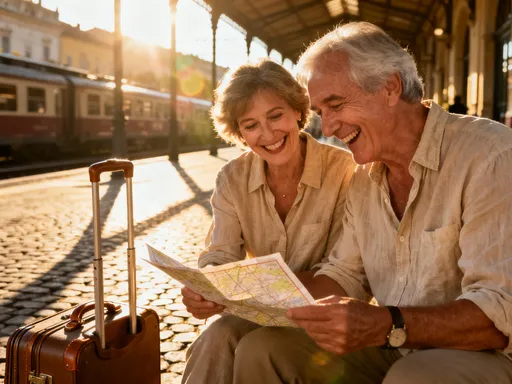
To truly experience Linz, one must adopt the mindset of a flâneur—a wanderer who observes without hurry. Begin by choosing accommodations that place you within walking distance of the Altstadt or along the Danube promenade. Small boutique hotels or family-run guesthouses offer a more intimate experience than large chains, often with hosts who can share personal recommendations. Staying in a residential neighborhood like Urfahr or Kleinmünchen also allows you to experience daily life beyond the tourist core.
The best times to walk are early morning, when the streets are quiet and the light is soft, or during the golden hour before sunset, when the river glows and shadows stretch across facades. Carry a notebook or use a smartphone to jot down observations, sketch details, or take photos of textures—peeling paint, weathered stone, reflections in glass. These records deepen engagement and help you notice patterns over time.
Plan your route by architectural era. Start in the Altstadt to absorb the Baroque atmosphere, then move toward the river to explore industrial conversions and modern landmarks. Allow yourself to get “lost” in side streets, and don’t hesitate to enter courtyards or small parks. Pause regularly—at a traditional café like Café Traxler for a slice of Linzer Torte, or at a riverside kiosk for a coffee with a view. These breaks are not diversions; they are essential to the rhythm of slow travel.
Engage with local culture by visiting neighborhood markets, attending a concert at the Brucknerhaus, or exploring independent galleries in repurposed buildings. Many of these experiences are not advertised in guidebooks but discovered through conversation. A simple “Guten Tag” to a shopkeeper or a smile to a neighbor can open doors to unexpected moments. Above all, resist the urge to document everything. Sometimes, the most meaningful experiences are the ones held in memory, not on a screen.
For those interested in deeper understanding, consider downloading a self-guided walking tour from the Linz Tourism Office or borrowing a themed map that highlights architectural transitions. But remember—the goal is not to complete the tour, but to let it guide your attention. Linz rewards curiosity, not completion.
In a world that glorifies speed, Linz offers a quiet alternative. It doesn’t shout—it murmurs through stone, steel, and glass. By slowing down, I didn’t just see buildings; I felt the city’s evolving breath. Its architecture isn’t frozen in time but alive, adapting, speaking. In the curve of a Baroque gable, the rust of an old factory beam, the reflection in a glass museum wall, I heard stories of resilience, reinvention, and quiet beauty. Linz taught me that the deepest travel experiences come not from how far we go, but from how deeply we look. In pausing, in listening, in staying present, we don’t just visit a place—we connect with it. And sometimes, that connection changes everything.